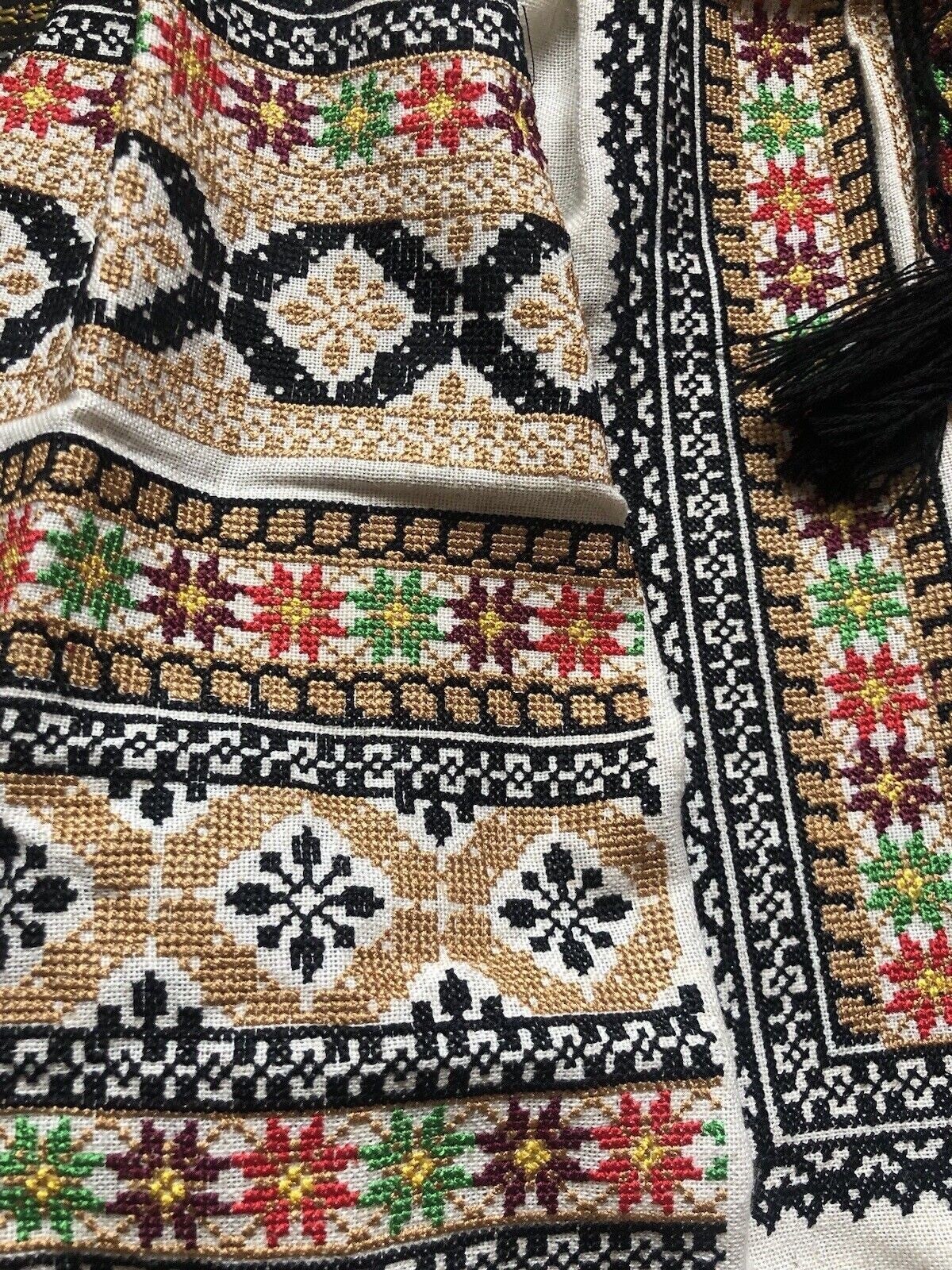
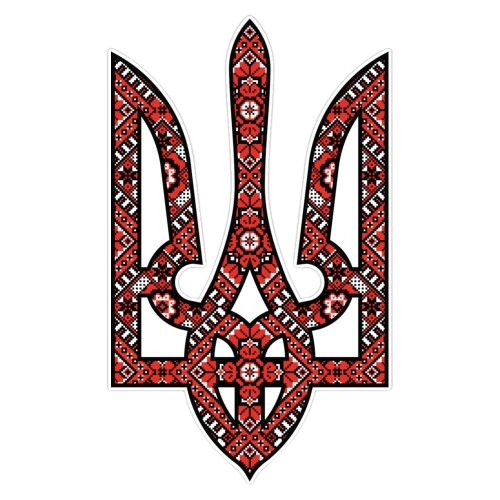
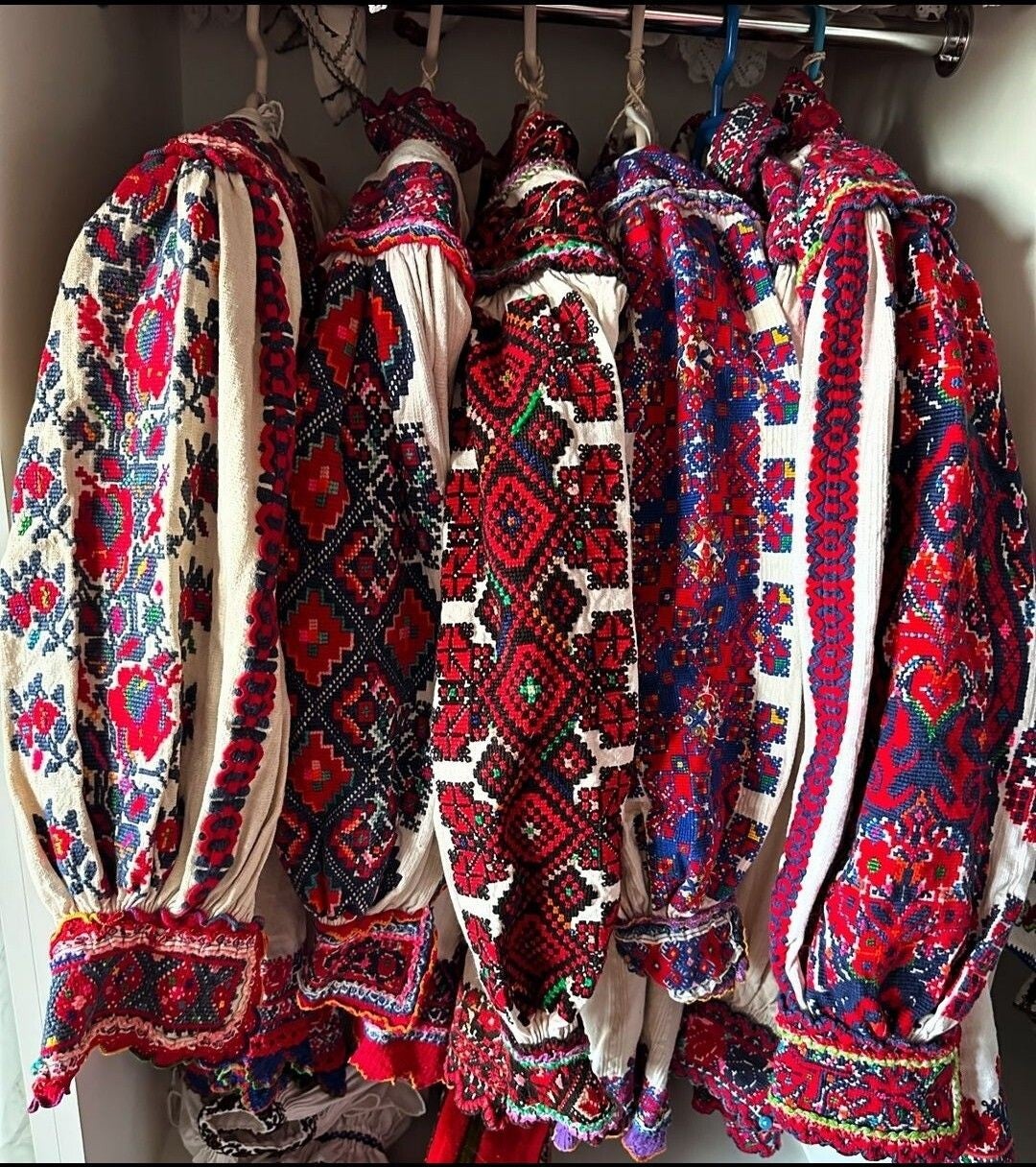
Discover Ukrainian Embroidery

This page is dedicated to the rich and colourful world of Ukrainian needlework, allowing you to unpack the unique designs seen on your Vyshyvanka, so that you have a comprehensive understanding of their meanings and symbolism. To begin, continue through this page!

Origins of Ukrainian embroidery

 It is indicated by archeological discoveries in Ukraine that embroidery has existed there before the prehistoric times. Embroideries are found on drawings and on the oldest pieces of extant cloth that date back to 1240!


The original inspiration behind cloth embroidery was faith in the power of protective symbols. However as religion and humanity evolved it later it became a more aesthetic choice. Symbolic designs were initially incorporated into the woven cloth by means of a weaving shuttle or a needle. Interestingly most of the early symbols seen on ancient Ukrainian clothing, originate in Asia. This was a result of migrations, wars, and trade, that occurred around the territory of the Dnipro River Valley and the neighbouring areas. These early symbols were transformed into more complicated patterns through the influence of the byzantine era. During this time a new branch of embroidery came about; church embroidery, which required imported materials that demanded more complicated techniques. Over the course of time and under the influence of new artistic styles, folk embroidery and church embroidery became more differentiated. Centres of church embroidery developed in the monasteries, while cities like Kyiv Lviv and Bordy became hubs for the embroidery trade, which produced cloths decorated with folk embroidery for the Cossaks and the nolibity.


Embroidery even after this era remained popular and developed as techniques and materials were perfected. It was found that at the end of the 19th century embroidery was flourishing in three fields— in church, in folk customs, and for clothing. The oldest monuments of embroidery date back to the 6th century. Figures of people dressed in festively decorated robes were found near the village of Martynivka, Cherkasy region. The shirts on the figurines had an original patterned embroidery at chest level. Extraordinarily the uniform of ordinary Ukrainian peasants was decorated with a similar ornament just 100 years ago. 


Despite the close contacts with various countries, and the influence of other peoples (the ancient Greeks and eastern tribes) on the culture of the ancient Ukrainians, Ukrainian embroidery remained basically untouched. The people's respect for their own history, traditions and rituals became the reason for the creation of a unique authentic style that has passed through the ages to the present day. It is interesting that some pagan embroidery motifs were preserved on Christian icons of the 15th century. 
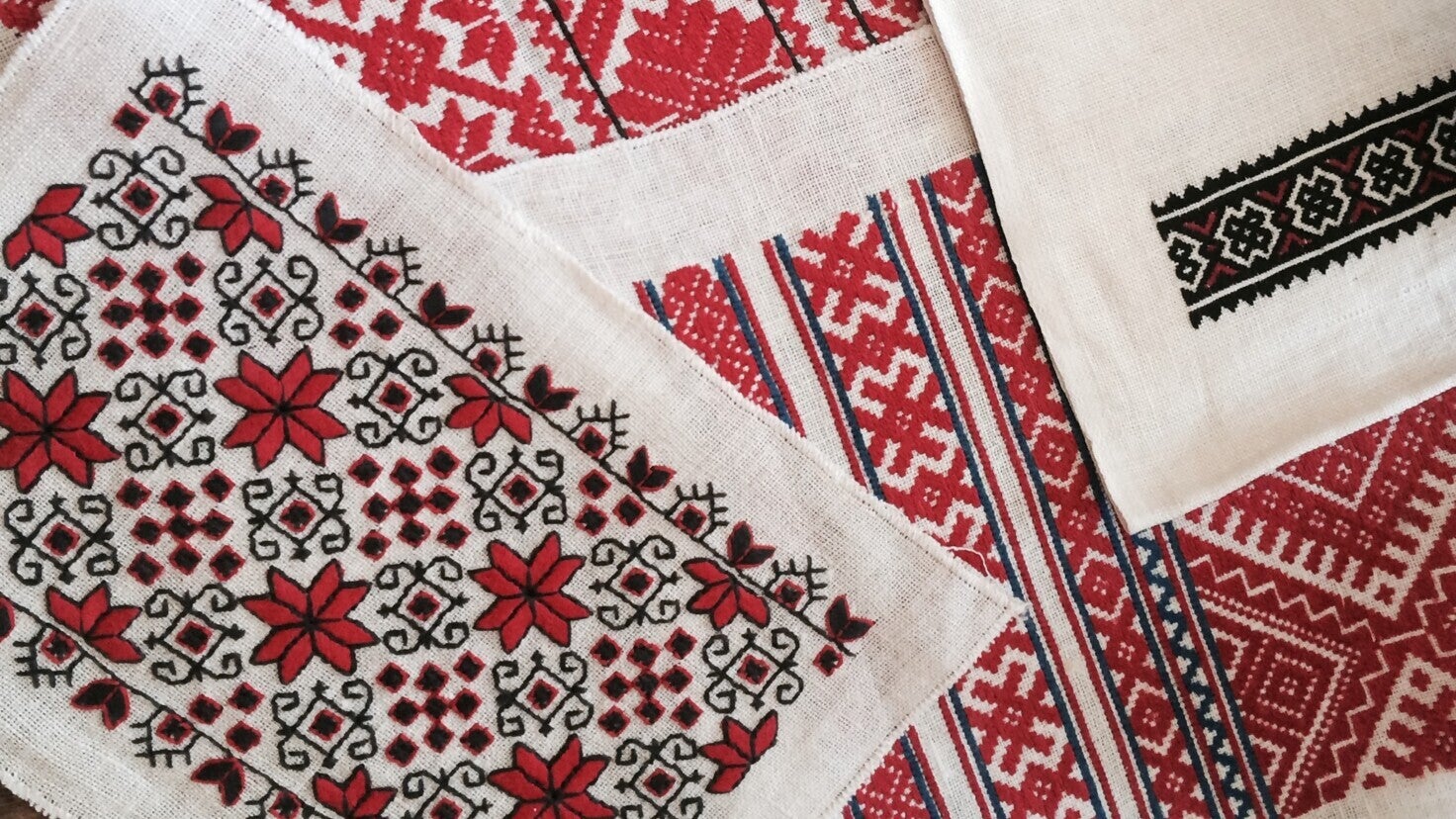
 

Geometric Shapes 

Infinite lines

The infinite line is also called the  “bezkonechnyk”, the winding dance or the meander. Scholars have shown that this symbol was popular on the territory of Ukraine more than 20,000 years ago. In ancient Ukrainian traditions, its soft curves are associated with water, symbolising a harmonious flow of life. Its infinite pattern winds its way like the thread of fate, but always comes back to the source. This motif is is closely connected with the ritual dance that Ukrainian girls traditionally perform in spring, charging the Earth with their graceful movements. The “meander is often found in Hutsul, Volyn, Kyiv, Poltava and Kuban regional embroideries. Meander patterns usually decorate men’s shirts, bestowing strength and vitality.

Read more »

Tree of Life

The Tree of Life is found in art where the universe contains three distinct components; the underworld, the earthly world and the heavenly kingdom. The underworld is depicted by the trees roots which equal the past, the trunk represents the present and the crown represents the future,  giving it connection to the cycle of life. The Trees multidimensional aspect allows it to symbolise unity as it shows connection between generations. It reflects the image of life and the family by showing the continuity of heritage, culture and life through its three sections.  In Ukrainian embroidery this symbol can be recognized not only in the branches (they can be either symmetrical or asymmetrical), but also in wheat stalks, sheafs, twigs or vines.  There are more intricate compositions where the tree motif is replaced by a female image – a woman with raised arms. This is the Great Goddess or Original Mother, the embodiment of life itself representing immortality and fertility. Embroidered tree patterns are mostly found on large three-to-four metre traditional embroidered towels that decorate homes and churches. They are commonly found in Central Ukraine.

Read more »

Keys

This is known as the key. Embroiderers in different regions of Ukraine referred to this motif in different ways;

Read more »

Swargas

The Swarga also known as the contriversial swastika is seen as a cross in motion.  Before the symbols manipulation the swarga was a symbol of sun worship, with magical powers many ancient peoples revered. In ancient Ukrainian history, it was associated with the hearth and home and family fortune. The swarga can have different meanings based on its direction. A right facing swarga refers to the movement of the sun. Where as a left facing swarga is thought to symbolise a spiritual flame.  Quite often in Ukrainian embroidery especially on the Right Bank of the Dnipro the complete swarga (a left-facing swastika superimposed on a right-facing one). In Ukrainian folklore it is called a “krutorizhka” (twisted hornlet) - a symbol of harmony created by two equal flowing lines. The swarga is a very ancient symbol of strength and energy.

Read more »

Zoomorphic patterns